

Modern software products and analytics workflows depend on reliable SQL, yet not every developer or analyst wants to handwrite every query from scratch. SQL query builders help teams create, test, reuse, and optimize database queries with less friction. They can reduce repetitive code, improve safety, and make complex data access patterns easier to maintain across engineering and business intelligence teams.
TLDR: The most powerful SQL query builders combine speed, safety, flexibility, and maintainability. Developers often prefer code-first tools such as SQLAlchemy, jOOQ, Knex.js, Prisma, and Kysely, while data teams may benefit from visual or analytics-focused builders such as Metabase, Apache Superset, and dbt. The best choice depends on whether the team needs application integration, analytics exploration, reusable transformations, or governance. A strong query builder should support complex SQL without hiding how the database actually works.
Why SQL Query Builders Matter
SQL remains one of the most important languages in technology, but raw SQL can become difficult to manage in large systems. Applications may need dynamic filters, conditional joins, pagination, permissions, and database-specific syntax. Data teams may need repeatable transformations, dashboards, and shared business logic. A good query builder helps bridge the gap between human-readable data logic and production-ready execution.
For developers, query builders can prevent common mistakes such as unsafe string concatenation, inconsistent query formatting, and duplicated data access logic. For analysts and analytics engineers, they can make datasets easier to explore, document, and reuse. The strongest tools do not simply generate SQL; they improve collaboration between software engineering, analytics, and operations.

1. SQLAlchemy
SQLAlchemy is one of the most mature and powerful query builders for Python developers. It provides both a SQL expression language and an object relational mapper, giving teams the choice between writing database-focused logic and working with higher-level application models.
Its greatest strength is flexibility. SQLAlchemy can represent complex joins, subqueries, transactions, schema definitions, and database-specific features. It is widely used in web applications, internal tools, automation systems, and data platforms. Teams that work heavily in Python often choose SQLAlchemy because it scales from simple queries to advanced database architecture.
- Best for: Python applications and backend services
- Strength: Mature ecosystem and advanced SQL expression support
- Consideration: It can be complex for beginners
2. jOOQ
jOOQ is a standout option for Java teams that want type-safe SQL. Unlike many ORMs that try to hide the database, jOOQ embraces SQL and provides a fluent Java API for building queries. It can generate code from the database schema, allowing developers to catch many query errors during compilation rather than at runtime.
This makes jOOQ especially valuable in enterprise systems where correctness, maintainability, and database performance are priorities. It supports advanced SQL features, vendor-specific syntax, stored procedures, and complex reporting queries. For organizations using Java or Kotlin, jOOQ is often one of the most powerful choices available.
- Best for: Java and Kotlin teams
- Strength: Type-safe SQL and excellent database feature coverage
- Consideration: It is more database-centric than traditional ORMs
3. Knex.js
Knex.js is a popular SQL query builder for Node.js. It gives developers a clean, chainable syntax for building queries while still keeping them close to SQL. Knex supports multiple databases, including PostgreSQL, MySQL, SQLite, and others, making it useful for teams that need portability.
Knex is often used in APIs, server-side applications, and projects that need reliable migrations alongside query building. It is less opinionated than a full ORM, which can be an advantage for developers who want control over database structure and query behavior.
- Best for: Node.js backends
- Strength: Lightweight, flexible, and widely adopted
- Consideration: It provides fewer high-level abstractions than some newer tools
4. Prisma
Prisma has become a major name in the JavaScript and TypeScript ecosystem. It is often described as an ORM, but its query-building experience is one of its strongest features. Prisma provides a type-safe client generated from a schema, enabling developers to create queries with excellent editor autocomplete and compile-time validation.
Prisma is especially attractive for product teams building modern web applications. It simplifies common database operations and makes data access more readable. However, teams with extremely complex SQL requirements may still need raw SQL support or another lower-level query builder for specialized cases.

- Best for: TypeScript applications and fast-moving product teams
- Strength: Excellent developer experience and type safety
- Consideration: Complex SQL may require escape hatches
5. Kysely
Kysely is a modern TypeScript SQL query builder designed for strong typing without unnecessary heaviness. It gives developers a fluent API while preserving deep control over generated SQL. For teams that want type safety but do not want a full ORM, Kysely is an increasingly compelling option.
Its design works well for backend services where developers want predictable SQL and strong integration with TypeScript. Kysely is particularly useful when a team values explicit queries, schema awareness, and clean application code.
- Best for: TypeScript teams wanting a lightweight query builder
- Strength: Strong typing with direct SQL control
- Consideration: Smaller ecosystem than older tools
6. dbt
dbt is not a traditional application query builder, but it is one of the most powerful SQL-based tools for data teams. It allows analytics engineers to define transformations as modular SQL models, add tests, create documentation, and manage dependencies between datasets.
For data warehouses such as Snowflake, BigQuery, Redshift, and Databricks, dbt helps teams turn raw data into trusted analytical models. It is ideal for organizations that want governed, version-controlled, reusable SQL transformations. While developers may use query builders inside applications, data teams often use dbt to build the reliable analytical layer those applications and dashboards depend on.
- Best for: Analytics engineering and warehouse transformations
- Strength: Version-controlled SQL models, testing, and documentation
- Consideration: It is focused on transformations, not application queries
7. Metabase and Apache Superset
Metabase and Apache Superset serve a different but important audience: analysts, operations teams, and business users. Both tools allow users to build queries, charts, and dashboards without always writing raw SQL. They also offer SQL editors for more technical users.
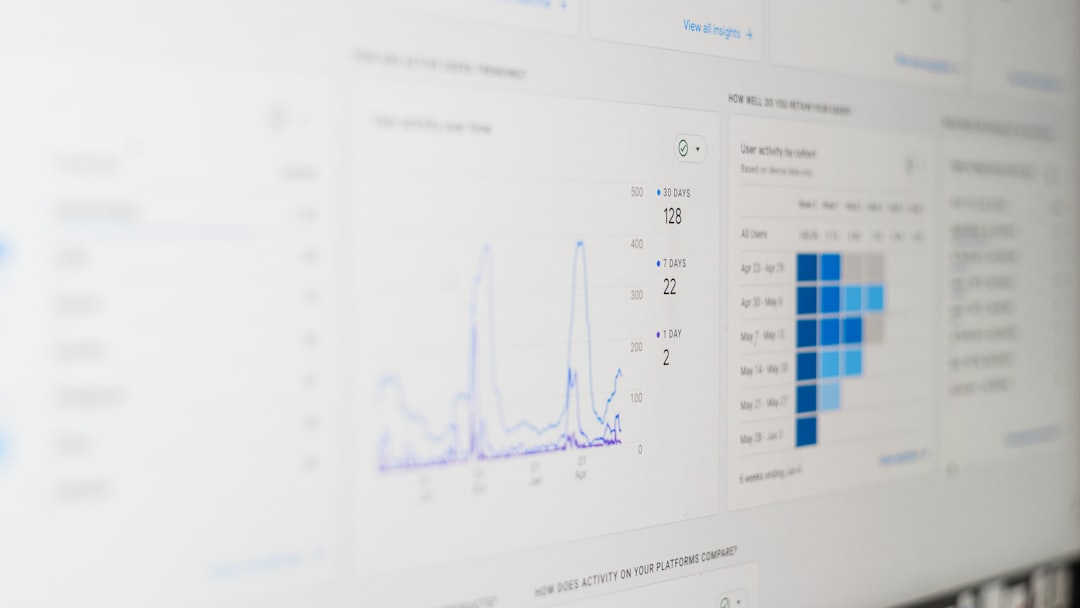
Metabase is known for ease of use and quick setup, making it popular with startups and internal teams. Apache Superset is more extensible and often suits organizations that need open-source business intelligence at scale. These platforms are powerful when the goal is not only to build a query, but also to share the result visually.
- Best for: Dashboards, self-service analytics, and reporting
- Strength: Visual exploration and team accessibility
- Consideration: They are less suited for application-level data access
How Teams Should Choose
The best SQL query builder depends on the team’s workflow. A backend engineering team may prioritize type safety, migrations, transactions, and integration with application code. A data team may prioritize reusable transformations, documentation, dashboard creation, and access control. A cross-functional organization may need more than one tool.
Teams should evaluate whether a query builder supports their main database, handles complex joins and aggregations, prevents injection risks, and fits existing development practices. They should also consider how easy it is to debug generated SQL. A tool that hides too much can become frustrating when performance problems appear.
In practice, the most successful teams choose tools that make simple queries faster without blocking advanced SQL. The ideal query builder should help developers and analysts move quickly while still respecting the power and complexity of the database underneath.
FAQ
What is a SQL query builder?
A SQL query builder is a tool that helps users create SQL queries through code, a visual interface, or reusable models. It can reduce manual SQL writing and improve consistency.
Are query builders better than raw SQL?
Not always. Query builders are useful for safety, reuse, and dynamic query generation, but raw SQL can be better for highly specialized or performance-critical queries.
Which SQL query builder is best for TypeScript?
Prisma and Kysely are strong choices for TypeScript. Prisma offers a polished ORM-style experience, while Kysely provides more direct query-building control.
Which tool is best for data teams?
dbt is a leading choice for analytics engineering and SQL transformations. For dashboards and exploration, Metabase and Apache Superset are powerful options.
Can teams use multiple SQL query builders?
Yes. Many organizations use one tool for application development, another for analytics transformations, and another for reporting dashboards.