
AI search is changing how people discover brands, products, advice, and expertise. Instead of scanning ten blue links, users increasingly ask conversational engines for direct answers, comparisons, summaries, and recommendations. That shift has created a new discipline: GEO, or Generative Engine Optimization. To succeed, marketers need more than rankings; they need metrics that reveal whether AI systems understand, cite, trust, and recommend their content.
TLDR: GEO metrics measure how often and how accurately your brand appears in AI-generated search responses. The most important signals include visibility, citation frequency, answer share, sentiment, topical authority, and conversion impact. Unlike traditional SEO, GEO focuses on being included inside answers, not just appearing on a results page. The best measurement approach combines manual testing, AI monitoring tools, analytics data, and structured content audits.
Why GEO Metrics Matter
Traditional SEO performance is usually measured through rankings, impressions, clicks, backlinks, and organic conversions. Those metrics still matter, but AI search introduces a different user journey. A person may ask an AI assistant, “What are the best project management tools for agencies?” and receive a complete answer without clicking any link. If your brand is mentioned, summarized positively, and cited as a source, you may influence the decision even before a website visit happens.
This creates a measurement challenge: how do you track performance when the answer may appear outside your website? GEO metrics solve this by evaluating your presence inside generative responses. They help you understand whether AI engines see your content as credible, whether your brand is associated with relevant topics, and whether users are likely to take action after encountering your name in an AI answer.
1. AI Visibility Score
AI visibility measures how often your brand, website, products, or experts appear in AI-generated answers for target prompts. Think of it as the GEO equivalent of search visibility, but instead of tracking where you rank, you track whether you are included at all.
To calculate it, create a list of important prompts related to your business. For example:
- “Best accounting software for freelancers”
- “How to choose a cybersecurity provider”
- “Top healthy meal delivery services in London”
- “What is the most reliable CRM for small businesses?”
Run these prompts across AI search platforms and record whether your brand appears. A simple formula is:
AI Visibility Score = Prompts where brand appears ÷ Total prompts tested × 100
If your brand appears in 24 out of 60 prompts, your AI visibility score is 40%. Over time, this metric shows whether your GEO efforts are increasing your presence across relevant answer spaces.
2. Citation Frequency
Being mentioned is useful, but being cited is even more powerful. Citation frequency tracks how often AI engines use your website or content as a named source. This matters because citations signal that your material is considered authoritative enough to support an answer.
High citation frequency often comes from content that is clear, factual, structured, and original. Research reports, statistics pages, comparison guides, glossaries, expert interviews, and detailed how-to articles tend to perform well. If AI systems repeatedly cite your work, you are not only gaining visibility; you are becoming part of the knowledge layer behind the answer.
3. Answer Share
Answer share measures how much space or influence your brand has within an AI response compared with competitors. In traditional search, you might compare ranking positions. In GEO, you compare presence within the generated answer.
For example, if an AI response lists five recommended tools and your brand appears first with a detailed description, your answer share is strong. If you are mentioned briefly at the end, it is weaker. If competitors are consistently described as “best for enterprise teams” or “most affordable,” while your brand receives vague wording, your positioning may need improvement.
Answer share can be scored manually using categories such as:
- Prominent: Brand appears early, with detailed and positive context.
- Moderate: Brand is included but not emphasized.
- Minor: Brand is briefly mentioned or grouped with others.
- Absent: Brand does not appear.

4. Sentiment and Accuracy
Visibility is not always good news. If AI search engines describe your product inaccurately, highlight outdated pricing, or associate your brand with the wrong audience, you may be losing trust. That is why sentiment and accuracy are essential GEO metrics.
Sentiment tracks whether AI-generated mentions are positive, neutral, or negative. Accuracy checks whether the information is correct. A brand might be visible in many answers but still suffer if the AI says it lacks features it actually offers, cites old reviews, or misunderstands its use case.
To measure this, review AI responses for:
- Correct product names, features, and categories
- Current pricing or availability, when mentioned
- Accurate descriptions of target customers
- Fair comparison with competitors
- Positive, neutral, or negative language
If recurring inaccuracies appear, update your website content, publish clearer product pages, add structured data, refresh third-party profiles, and correct inconsistent information across the web.
5. Topical Authority Coverage
AI systems rely on patterns of expertise. If your website has only one article about a topic, it may be less likely to appear than a competitor with a complete, well-connected content library. Topical authority coverage measures how thoroughly your brand addresses the subjects it wants to be known for.
Start by mapping your core topics and subtopics. A financial planning company, for instance, might track coverage around retirement planning, tax strategies, estate planning, investment risk, pensions, and budgeting. Then assess whether each topic has high-quality, up-to-date content that answers real user questions.
The goal is not to publish endless shallow articles. The goal is to create a strong knowledge base that AI systems can interpret, connect, and trust. Good GEO content is specific, well-organized, and supported by examples, data, expert insight, and clear definitions.
6. Source Diversity
AI search engines do not learn about your brand from your website alone. They may reference industry publications, review platforms, business directories, social profiles, media coverage, forums, and trusted databases. Source diversity measures how many credible places confirm your expertise and brand information.
If your company is mentioned consistently across authoritative sources, AI systems have more confidence in what you do. If your online presence is thin or inconsistent, your brand may be overlooked. Track where your brand appears and whether those mentions reinforce your preferred positioning.
7. Prompt Portfolio Performance
A single keyword is no longer enough. AI search users ask long, specific, conversational questions. Your GEO measurement should include a prompt portfolio: a categorized set of questions that represent customer needs at different stages of the journey.
Useful prompt categories include:
- Informational: “How does cloud backup work?”
- Comparative: “Best cloud backup tools for small law firms”
- Transactional: “Affordable cloud backup providers with support”
- Problem based: “How to protect business files from ransomware”
- Local or niche: “IT backup services for clinics in Manchester”
Measure performance by category. You may discover that your brand appears in educational answers but not in buying-intent comparisons, which signals an opportunity to create stronger decision-stage content.
8. Assisted Conversions from AI Search
Eventually, GEO must connect to business outcomes. Some AI platforms may send referral traffic, while others influence users without a direct click. Track visible referral traffic from AI tools in analytics, but also look for indirect signals: branded search growth, increases in direct traffic, higher conversion rates from comparison pages, and more leads mentioning AI tools in forms or sales calls.
Add a question such as “How did you hear about us?” to lead forms, and include options like “AI search or chatbot.” While self-reported attribution is imperfect, it can reveal patterns that standard analytics miss.
How to Build a GEO Measurement System
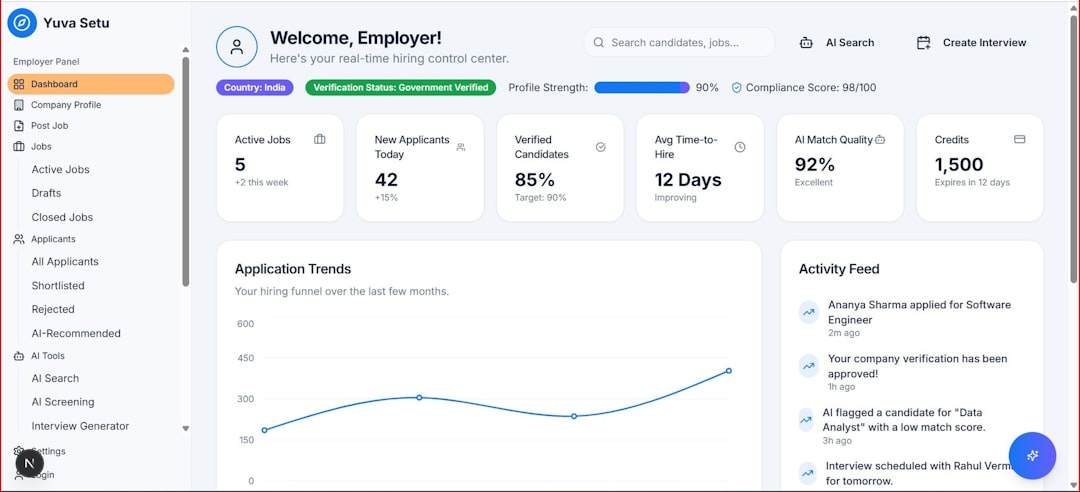
A practical GEO dashboard should combine qualitative review with repeatable tracking. Begin with 30 to 100 high-value prompts. Test them monthly across major AI search experiences. Record brand mentions, citations, sentiment, accuracy, competitors mentioned, and response position. Then connect those insights to content actions.
Your dashboard might include:
- Overall AI visibility score
- Citation frequency by source URL
- Top prompts where you appear
- Top prompts where competitors appear and you do not
- Sentiment and accuracy issues
- Content gaps by topic
- Traffic and conversion impact from AI referrals
The Future of GEO Measurement
GEO metrics will become more sophisticated as AI search matures. Marketers will need to measure not only whether they appear, but why they appear, which sources influenced the answer, and how users behave after seeing the response. The brands that win will be those that treat AI visibility as an ongoing reputation, content, and authority challenge.
In short, measuring AI search performance requires a broader view than traditional SEO. Rankings still matter, but the new prize is being trusted enough to become part of the answer. By tracking visibility, citations, answer share, sentiment, topical authority, and conversions, you can turn GEO from a vague buzzword into a measurable growth strategy.